
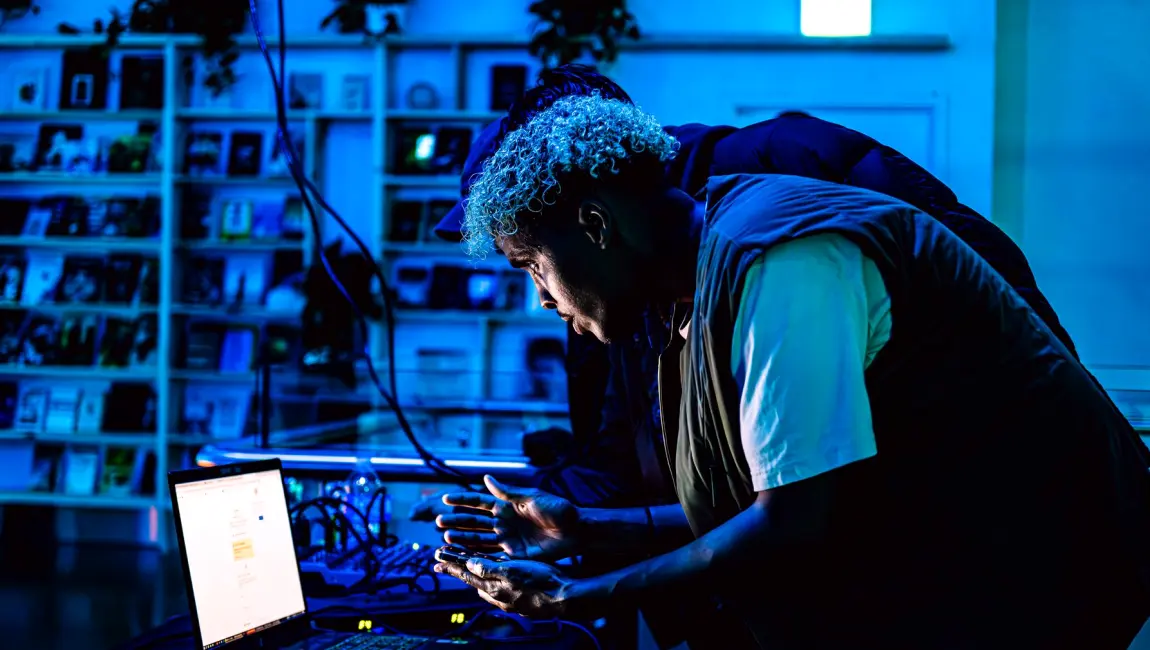
Start with who will be looking at the light
Before any fixture is chosen, decide who the lighting is for. A studio set lit for cameras has different demands from a stage lit for people standing forty metres back, and many shows have to satisfy both at once. I ask producers to name the main viewer, then the second one, and to say which wins when they disagree.
Write that answer down in one sentence. It becomes the reference point for every later choice, from how bright the key light needs to be to whether side light should be kept low to protect the audience's eyes. If the sentence is vague, the plot will be too, and you will pay for it during the rig day.
Be honest about the recording as well. If the show is filmed, find out who will look at the footage afterwards and on what kind of screen. A programme watched on phones forgives some things and punishes others, such as flat faces and noisy shadows.
- Name the primary viewer: camera, room audience or both
- Say which wins when their needs conflict
- Note how and where the footage will be watched
Check what the camera really needs
Cameras are less forgiving than eyes. Skin tones shift when mixed light sources of different colour temperature fall on the same face, and a bright background can leave a presenter looking dark. Before deciding anything, ask your camera technician what exposure range and colour setting the cameras will be set to, and plan the light to suit.
Think about contrast between the set and the people on it. A rich, dark backdrop looks handsome in the room but can make faces glow too brightly if the key light is pushed to compensate. Moving a speaker a metre forward can solve more than adding another lamp.
Ask whether movement is planned. Presenters who walk between marks need an even pool of light along the route, not a single hot spot, or the vision mixer will be fighting exposure all evening.
- Confirm colour temperature and mix of sources
- Agree the exposure range with the camera team
- Map the walking routes of presenters or performers
Look hard at the room and the rigging
A plot only works if the venue can hold it. Visit the space, or ask for a clear drawing, and note the ceiling height, the load rating of any beams or grid, and where trusses can safely hang. A lamp that looks perfect on paper is no use if there is nowhere to put it.
Check how the lights will be reached. In a studio with a fixed grid, access is easy; in a hall or marquee, every adjustment may need a ladder, a lift or a lowered truss, and that takes time and people. Decide early whether you can afford a re-focus once the audience is in.
Do not forget sightlines. Truss and cable runs can block a camera shot or the view from the back row. A short walk through with a tape measure usually shows problems before they become expensive.
- Record ceiling height and load ratings
- Plan access for focusing and repairs
- Test camera and audience sightlines against truss positions
Count the power and the heat
Lighting draws more current than people expect, and venues vary widely in what they can supply. Ask how many circuits are available, where the distribution boards are, and who is allowed to connect to them. If the answer is unclear, assume the supply is smaller than you need until someone shows you otherwise.
Modern LED fixtures use far less power than older tungsten lamps, but a large rig still adds up, and so does the cabling needed to feed it. Leave room in the plan for dimmer racks, data cables and spare lengths, and route them away from audio lines where you can.
Heat matters too. A small studio filled with hot lamps becomes uncomfortable for guests within the hour, and the air conditioning may struggle. In mid autumn the problem reverses in cold halls, where fixtures warm slowly and moving heads can behave oddly until they settle.
- Confirm available circuits and who connects to them
- Allow for dimmers, data cabling and spares
- Think about room temperature in both directions
Settle who runs the board and when you rehearse
A good plot still fails if nobody knows how to run it. Decide who operates the lighting desk during the show, whether they have seen the plot, and how cues will be called. If an operator is joining on the day, give them the plot and cue list well beforehand, not at the door.
Time for focusing and rehearsal is the most common casualty of a tight schedule. Ask for a slot in which the lights are on, the performers or presenters are in place and the cameras are running. Small corrections made then save a great deal of stress later.
Agree how changes will be handled during the event. One named person should have the authority to approve a late alteration, otherwise requests come from every direction and the rig drifts away from the plan everyone signed.
- Name the operator and share the plot early
- Book focus and rehearsal time with cameras running
- Choose one person to approve late changes
Get the plan and the handover on paper
Before saying yes, ask for the lighting plot, the equipment list and the rigging plan in writing, and read them together with the producer, the sound lead and the venue. A plan that only one person understands is a risk. Pin down what is included, what the venue provides and what is brought in.
Confirm the load-in and load-out times, because lighting is usually first in and last out. Ask what happens if the venue's access window shrinks, and whether the plot has a simpler fallback version that keeps the show lit if something fails.
Finally, agree how the notes will be handed over after the event. Marked-up plots and focus notes are worth keeping, especially if the same set or stage will be used again, because they let the next crew start from a known position.
- Request plot, equipment list and rigging plan in writing
- Check access times and a simpler fallback plot
- Keep marked-up plots and focus notes for the next use
None of these questions needs special training, and most can be answered in a single meeting if the right people are in the room. Work through them before committing to a plot, and you will find the decisions about fixtures and positions become simpler, quicker and easier to defend. A lighting plan that has been checked against the camera, the room, the power and the crew rarely needs rescuing on the day.
Keep reading
Priya Shah
Lighting DesignerPriya draws lighting plots for studio sets and festival stages, with a focus on how light reads on camera.